
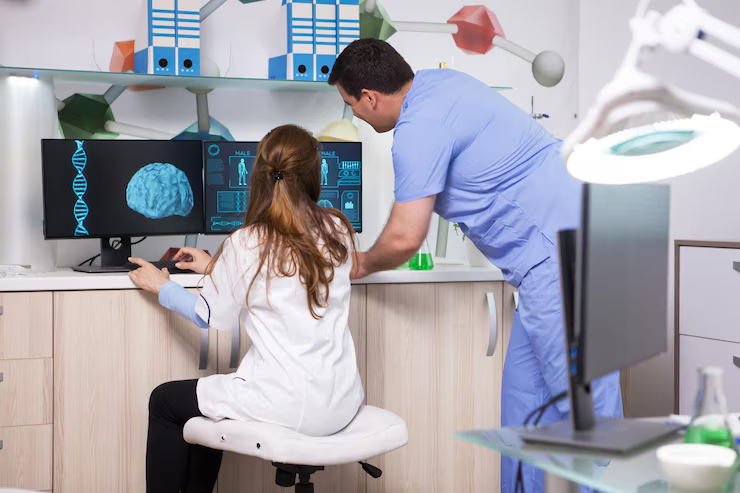
▶ EMG involves testing the electrical activity of muscles recorded as a graph A small and thin needle is inserted in the muscle and patient may be asked to contract the muscle as required by the Neurologist. This test is exclusively performedby the Neurophysician who is aware of the clinical details, symptoms andother tests of the patients.
▶ There may be mild discomfort (similar to a small insect bite) with insertion of the needle. If done in expert hands, the procedure is very less painful and can be done with minimal discomfort.
↪ Dress in clothes that permit access to the area to be tested or that are easily removed.
↪ You may need to roll your sleeves up past your elbow and/or your pants up past your knee.
↪ Come with your skin clean and do not apply lotions or other products on your skin.
↪ Eat, sleep and take medications as usual.
↪ Inform if you are using blood-thinners (e.g. aspirin, clopidogrel, warfarin, etc.), if you are suffering from bleeding disorder or have a skin infection.
For your first visit, please bring a valid ID, your insurance card, any current medications or a list of them, and any relevant medical records
EMG may cause mild discomfort similar to a small insect bite, but it is generally well-tolerated and done with minimal pain by experienced neurologists.
EMG helps identify muscle and nerve disorders like neuropathies, myopathies, and motor neuron diseases.
Yes, wear loose-fitting clothes, avoid lotions or creams, and inform your doctor if you’re on blood thinners or have a skin infection.
Discover expert care tailored to you. Schedule your first consultation and begin your journey to better brain and nerve health. We're here to support you—every step of the way.

Personalized care for brain and nervous system health.
WhatsApp us
